Module 2: What Are Dangerous Goods ?
What are Dangerous Goods ?
Dangerous Goods, often referred to as DG, are articles or substances capable of posing a risk to:
- health,
- safety,
- property,
- or the environment
during transport by air.
Many Dangerous Goods are commonly used in everyday life and may appear harmless outside an aviation environment.






Risk in Aviation Operations
Aviation environments involve:
- confined spaces,
- vibration,
- pressure variations,
- heat,
- fuel systems,
- and limited emergency response capability.
Because of these operational conditions, substances that may appear safe on the ground can become hazardous during air transport.
Dangerous Goods regulations are designed to reduce these risks and support safe aviation operations.
Everyday Dangerous Goods Examples
Many everyday products may be classified as Dangerous Goods during air transport.
Examples may include:
- lithium batteries
- power banks
- aerosols
- perfumes
- paints
- cleaning products
- fuel containers
- oxygen cylinders
- camping equipment
- medical supplies
Some items may be permitted under specific conditions, while others may be restricted or forbidden.
Introduction to Lithium Batteries
Lithium batteries are among the most common Dangerous Goods encountered in aviation operations today.
They are found in:
- mobile phones,
- laptops,
- tablets,
- cameras,
- power banks,
- electronic devices,
- and emergency equipment.

Damaged, defective or improperly transported lithium batteries may generate:
- heat,
- smoke,
- fire,
- or thermal runaway.
Awareness of lithium battery risks has become an important part of aviation safety.
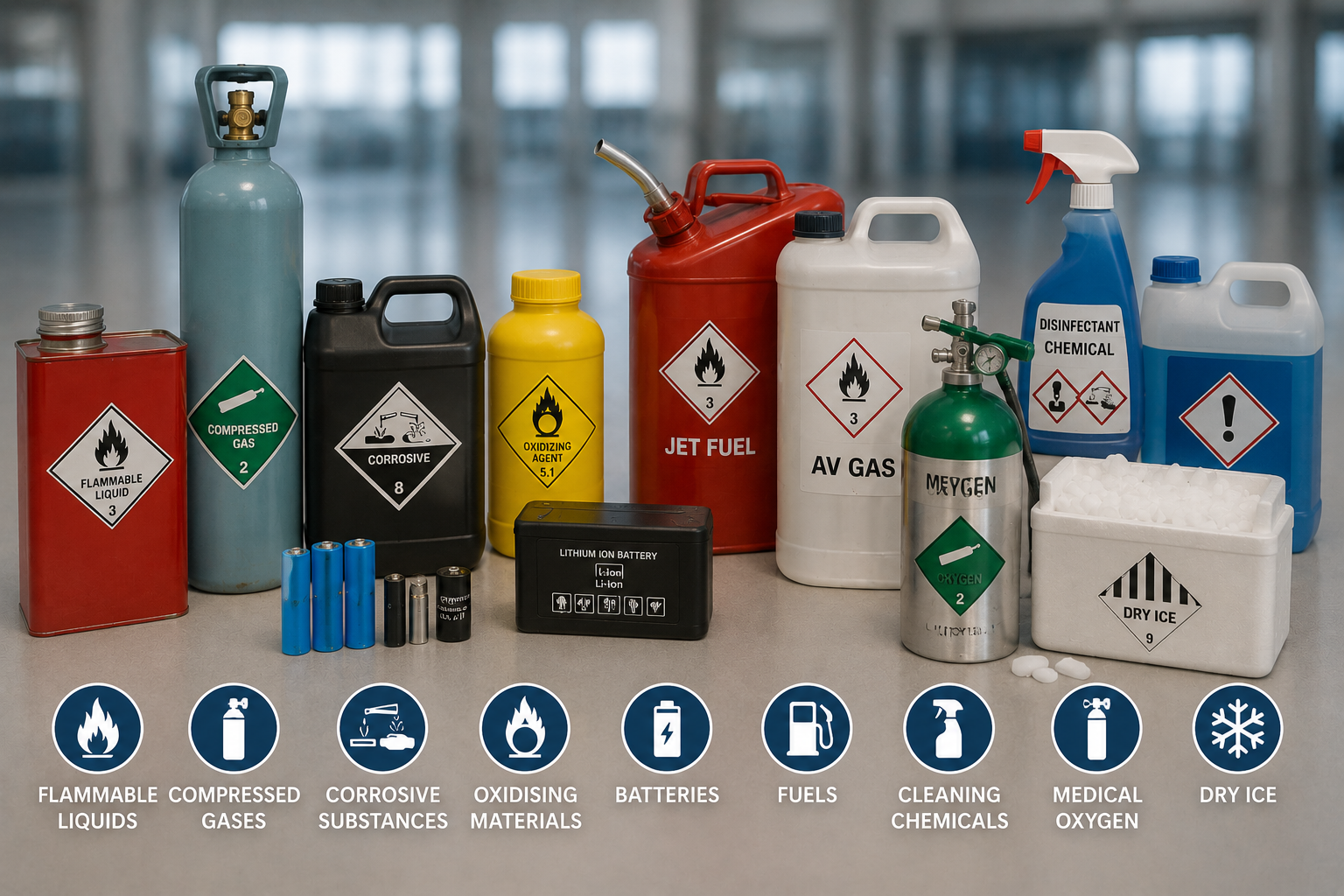
Common Hazardous Materials in Aviation
Common hazardous materials encountered in aviation environments may include:
- flammable liquids
- compressed gases
- corrosive substances
- oxidising materials
- batteries
- fuels
- cleaning chemicals
- medical oxygen
- dry ice
Some hazardous materials may require specific handling, packaging or transport limitations under aviation regulations.
Passenger Baggage Risks
Dangerous Goods are often carried unknowingly within passenger baggage.
Undeclared Dangerous Goods may create operational risks for:
- passengers,
- crew,
- aircraft,
- and ground personnel.
Awareness and vigilance are therefore essential in aviation operations.

Hazard Awareness
Recognising potential hazards is an important part of aviation safety awareness.
Personnel involved in aviation operations should remain aware of:
- unusual items,
- damaged batteries,
- leaking substances,
- undeclared hazardous materials,
- and warning labels.
Maintaining awareness helps support safer aviation operations.
There are no comments for now.
to be the first to leave a comment.