Module 3: ICAO Regulatory Framework
MODULE 3: ICAO Regulatory Framework
The transport of Dangerous Goods by air is governed by an international regulatory framework designed to support global aviation safety and operational consistency.
These regulations are developed through cooperation between
- international organisations,
- national aviation authorities and
- the aviation industry.
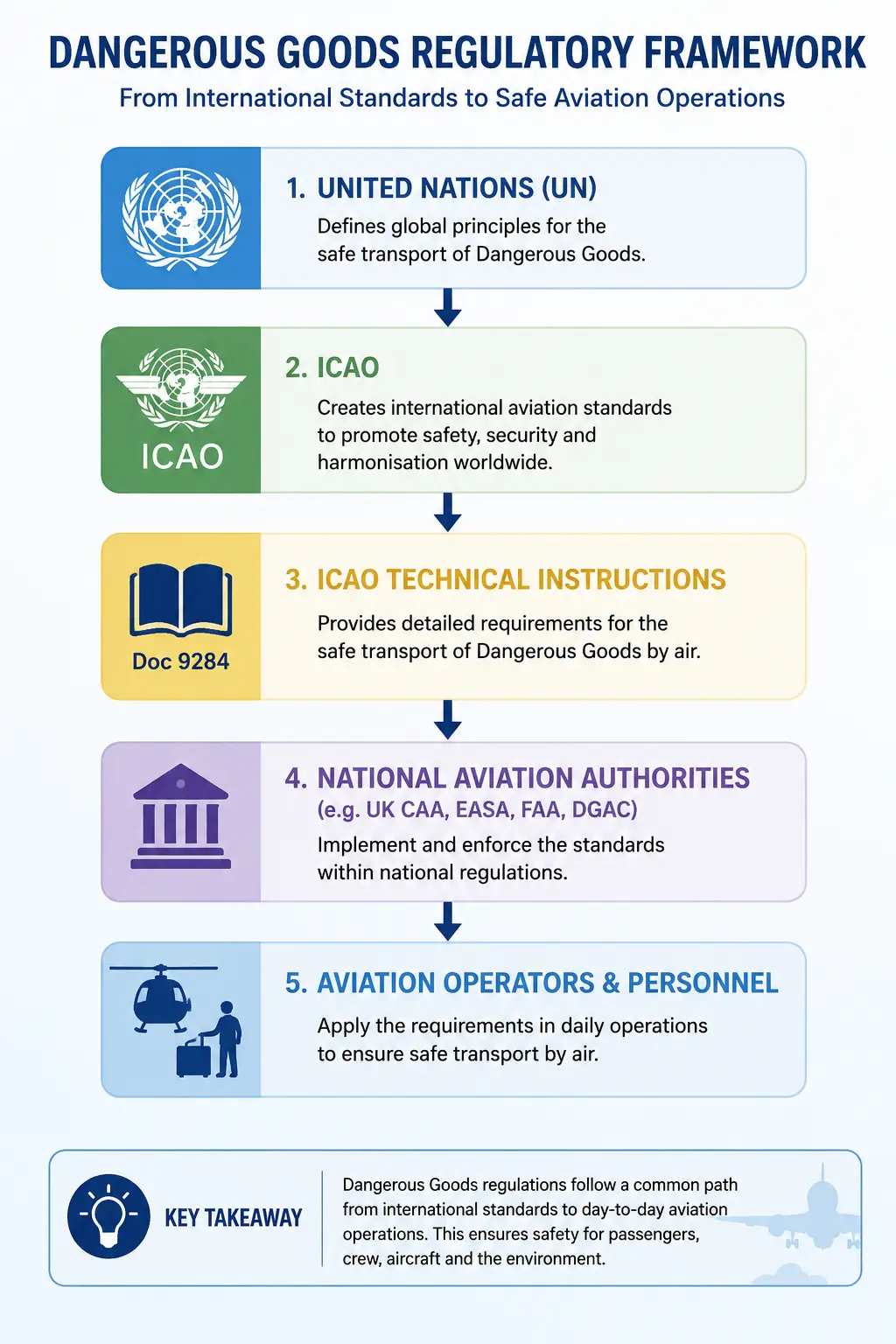
United Nations Overview

The United Nations (UN) establishes the global framework for the transport of Dangerous Goods across:
- air,
- sea,
- road,
- and rail transport.
The UN system defines:
- hazard classifications,
- UN identification numbers,
- and standardised transport principles used internationally.
ICAO & Aviation Safety
The International Civil Aviation Organization (ICAO) is the United Nations agency responsible for international civil aviation standards.
ICAO develops global standards and recommended practices intended to support:
- safe air transport,
- operational harmonisation,
- and international aviation cooperation.
This includes the framework governing the transport of Dangerous Goods by air.
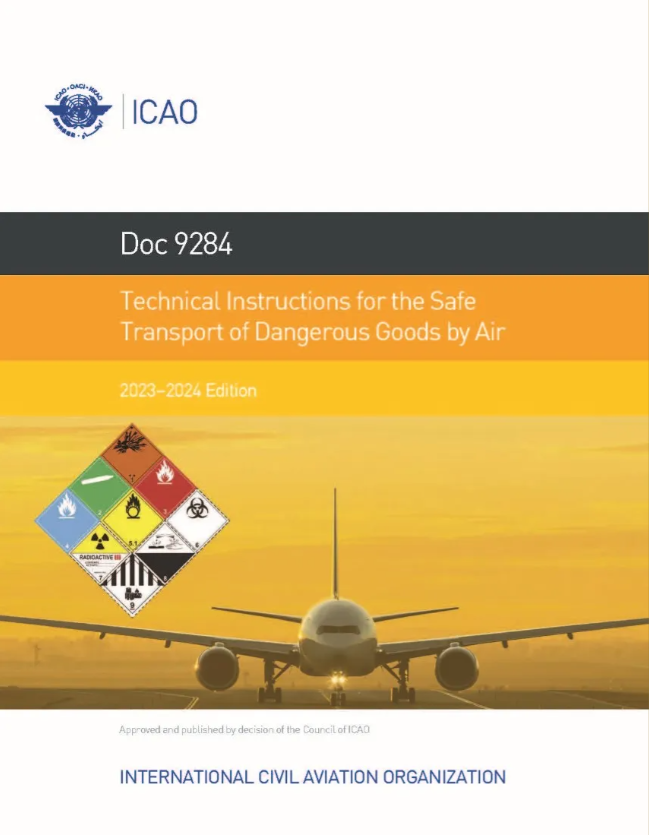
ICAO Technical Instructions
ICAO publishes the Technical Instructions for the Safe Transport of Dangerous Goods by Air.
These Technical Instructions establish internationally recognised requirements relating to:
- classification,
- packaging,
- marking,
- labelling,
- documentation,
- and operational limitations.
The Technical Instructions are periodically updated to reflect operational developments and regulatory amendments.
National Aviation Authorities

National Aviation Authorities are responsible for implementing aviation regulations within their respective jurisdictions.
Examples include:
- UK CAA
- FAA
- EASA
- DGAC
- Transport Canada
Some authorities may also publish additional national requirements or operational variations.
IATA Overview

The International Air Transport Association (IATA) publishes the IATA Dangerous Goods Regulations, based on the ICAO Technical Instructions.
These regulations are widely used within the aviation industry and may include additional operator-specific guidance and operational recommendations.
There are no comments for now.
to be the first to leave a comment.