Module 4: Recognising Dangerous Goods
MODULE 4: Recognising Dangerous Goods
Dangerous Goods are not always obvious.
Many hazardous items may appear harmless during normal daily use but can present operational risks during air transport.
Recognising potential Dangerous Goods is an important part of aviation safety awareness.
Hazard recognition involves identifying potential safety risks before they lead to incidents.
Personnel should remain alert to:
- warning labels,
- damaged batteries,
- leaking substances,
- unusual odours,
- overheating devices,
- and undeclared hazardous items.
Early recognition of hazards helps support safer aviation operations.
UN Numbers & Proper Shipping Names
Dangerous Goods are identified internationally using:
- UN Numbers
- and Proper Shipping Names.
A UN Number is a four-digit identification number assigned to a hazardous substance or article.
The Proper Shipping Name is the official transport name used to identify the hazardous material.
These references help personnel identify:
- the type of hazard,
- handling requirements,
- and transport limitations.
For example:
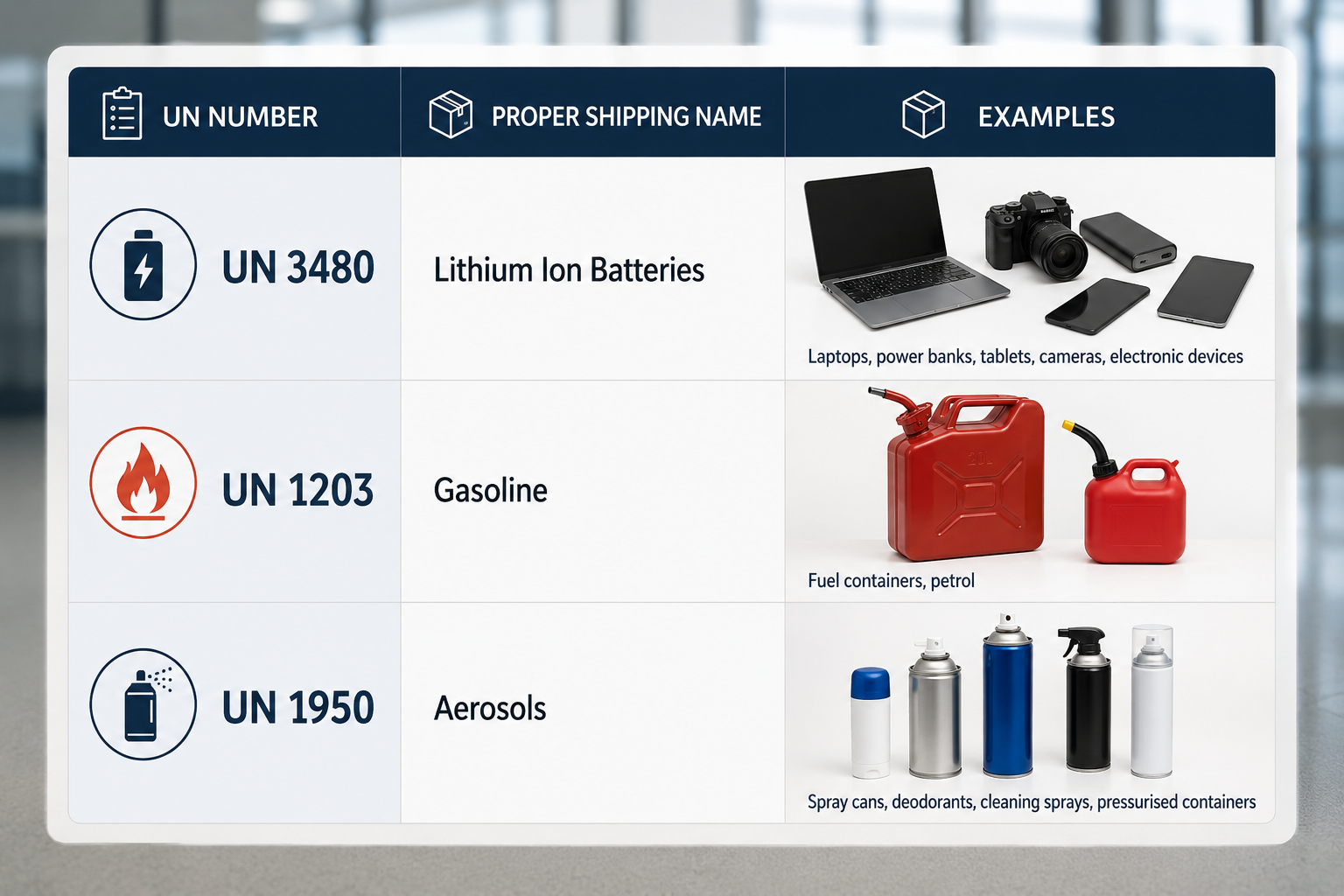
UN Numbers and Proper Shipping Names may appear on:
- package markings,
- labels,
- transport documentation,
- safety data sheets,
- and cargo information.
Recognising these references helps support hazard identification and operational awareness.
Material Safety Data Sheets (MSDS)
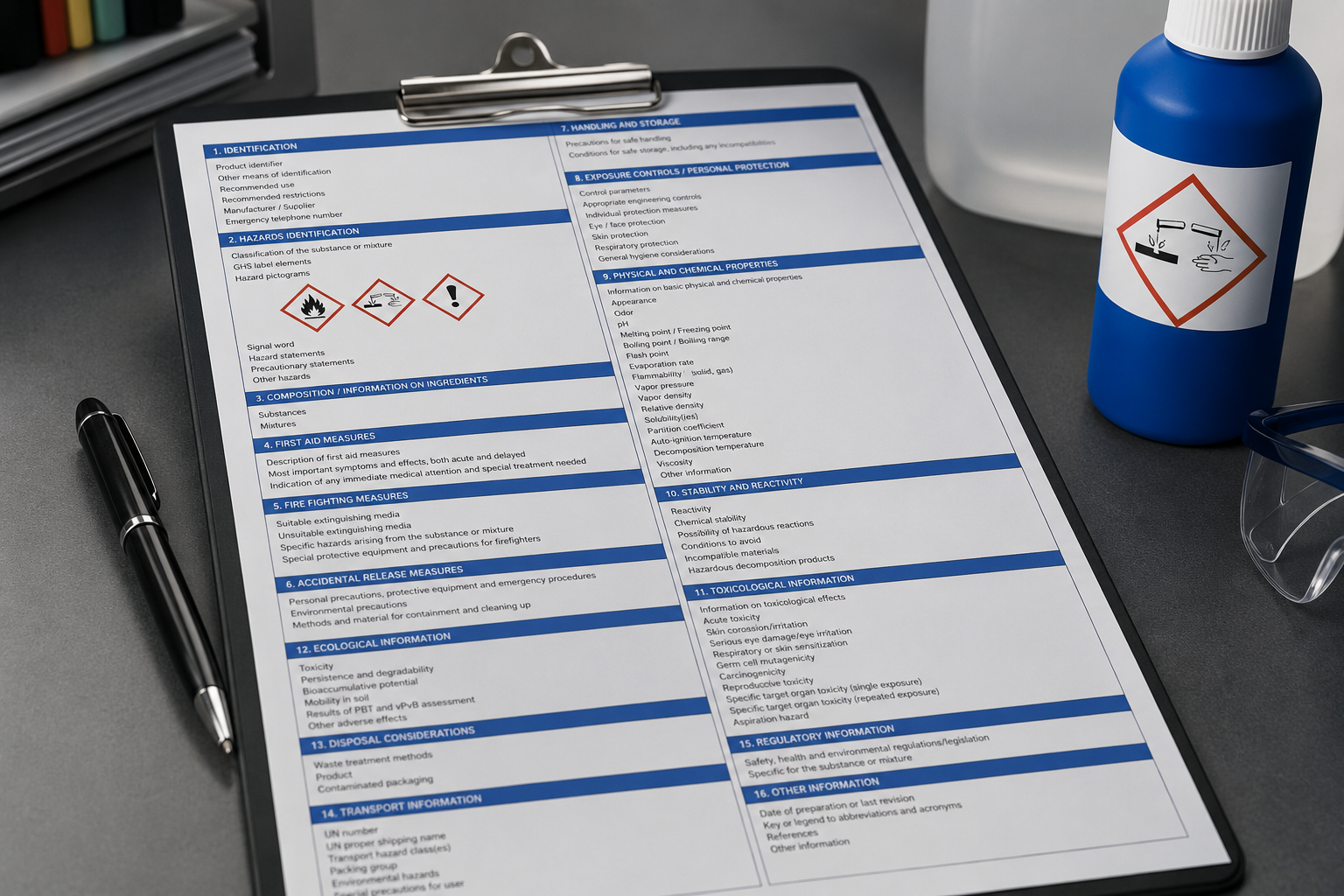
Material Safety Data Sheets, also called MSDS or SDS, are documents providing safety information about hazardous substances.
An MSDS may contain:
- hazard information,
- handling precautions,
- emergency response guidance,
- transport classifications,
- and storage recommendations.
For example, an MSDS for a cleaning product may indicate:
- whether the product is flammable,
- corrosive,
- or classified as Dangerous Goods during transport.
Recognising Undeclared Dangerous Goods
Undeclared Dangerous Goods are hazardous materials transported without proper identification or declaration.
These items may present operational risks because personnel may be unaware of their presence.
Undeclared Dangerous Goods may sometimes be identified through:
- unusual packaging,
- warning symbols,
- strong chemical odours,
- leaking containers,
- damaged batteries,
- fuel smells,
- pressurised cylinders,
- or undeclared electronic equipment.
Examples may include:
- spare lithium batteries carried inside backpacks,
- aerosol sprays packed in baggage,
- camping gas cartridges,
- fuel-powered tools,
- cleaning chemicals,
- or power banks transported without protection.
Undeclared or hidden Dangerous Goods may be found within:
- passenger baggage,
- operational equipment,
- cargo,
- maintenance materials,
- or personal belongings.
Recognising unusual items or warning signs helps support safer aviation operations.
Passenger Baggage Awareness
Passenger baggage may contain items restricted or forbidden during air transport.
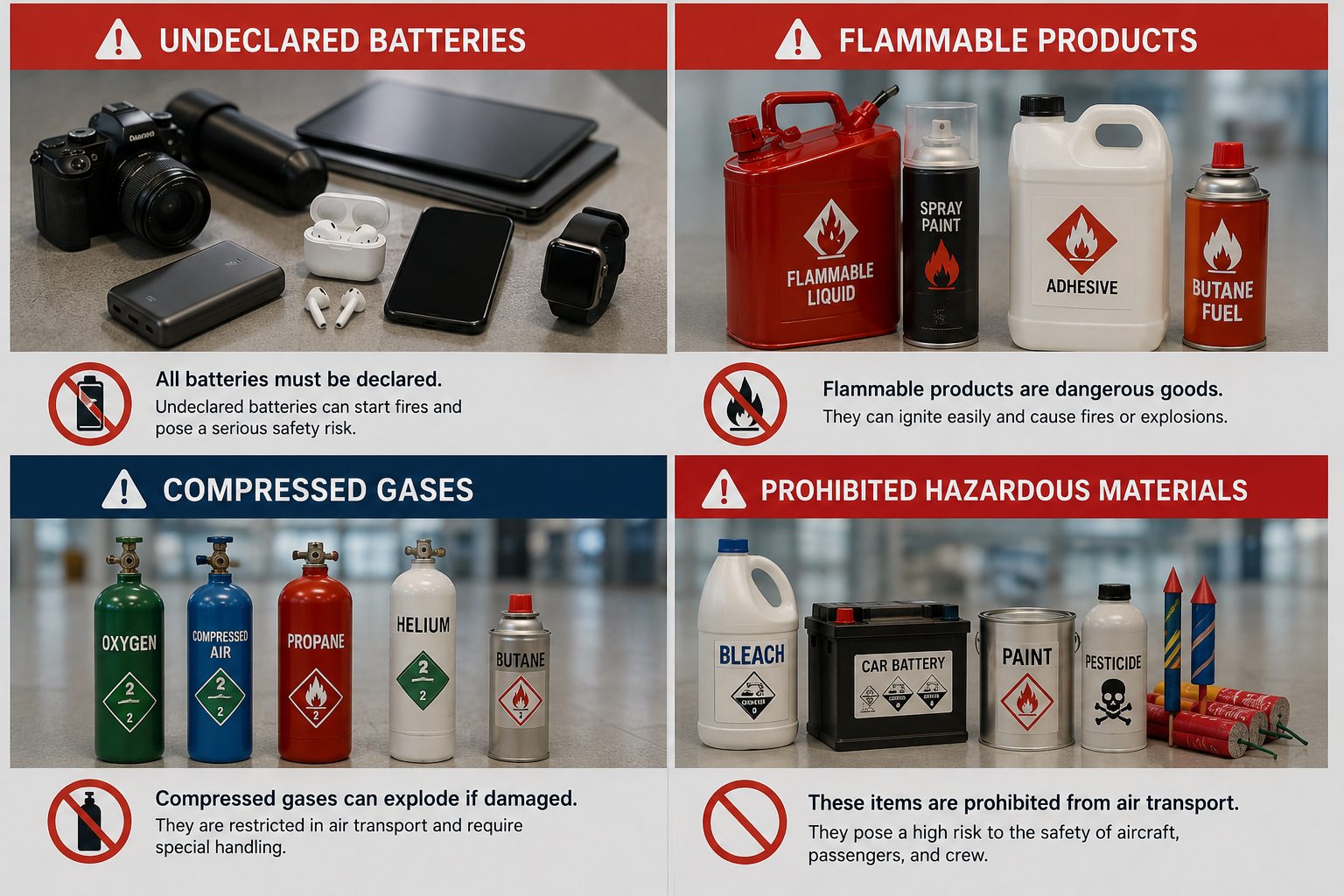
Personnel involved in aviation operations should remain aware of:
- undeclared batteries,
- flammable products,
- compressed gases,
- and prohibited hazardous materials.
Passenger awareness and communication play an important role in aviation safety.
There are no comments for now.
to be the first to leave a comment.