MODULE 9: Storage & Loading Awareness
MODULE 9: Storage & Loading Awareness
The way Dangerous Goods are stored, positioned and transported can influence operational safety.
Certain materials may present additional risks when exposed to:
- heat,
- pressure,
- vibration,
- impact,
- or contact with incompatible substances.
Understanding these risks helps support safer aviation operations.
General Loading Awareness Principles
When transported by air, Dangerous Goods should be handled in accordance with applicable regulations and operator procedures.
Personnel should be aware that:
- some items require specific transport conditions,
- certain materials may be restricted,
- and some Dangerous Goods require separation from other substances.
Loading requirements may vary depending on:
- the nature of the product,
- aircraft type,
- packaging,
- and applicable regulations.
⚠ Awareness only — this course does not provide loading authorisation.
Stowage Awareness
Stowage refers to the positioning and securing of items during transport.
Improperly secured items may:
- move during flight,
- become damaged,
- leak,
- or create additional hazards.
Awareness of safe stowage principles helps reduce operational risks.
Dry Ice Awareness
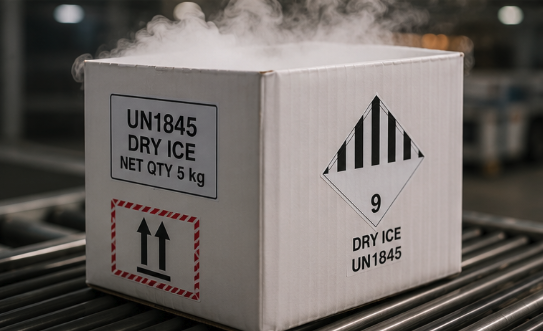
Dry ice is commonly used to keep temperature-sensitive products cool during transport.
Dry ice is classified as:
UN1845 — Dry Ice
Although widely used, dry ice releases carbon dioxide gas as it evaporates.
Personnel should be aware that excessive accumulation of carbon dioxide may create hazards in
Magnetised Materials
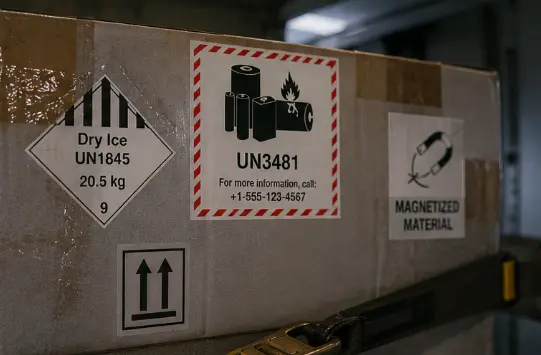
Certain equipment may contain strong magnets.
Examples include:
- loudspeakers,
- industrial equipment,
- scientific instruments,
- some electronic devices.
Strong magnetic fields may interfere with aircraft instruments and navigation systems.
Special transport requirements may therefore apply.
Lithium Battery Risks
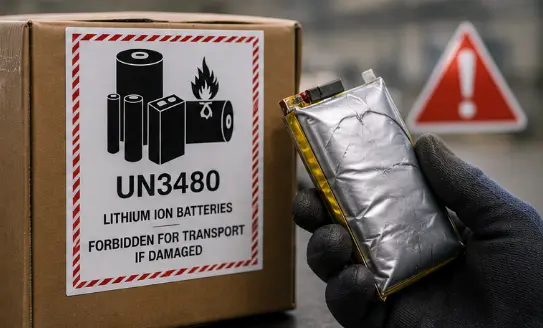
Lithium batteries represent one of the most significant Dangerous Goods challenges in modern aviation.
Potential risks include:
- overheating,
- short circuits,
- smoke generation,
- fire,
- thermal runaway.
Damaged or defective batteries may present increased risk.
Personnel should remain alert to:
- swelling,
- overheating,
- unusual odours,
- damaged battery casings.
Awareness of Incompatible Materials
Potential consequences may include:
- fire,
- toxic fumes,
- chemical reactions,
- or damage to surrounding materials.
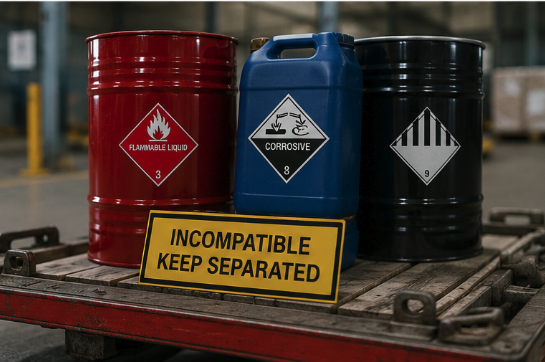
Personnel should remain aware that some Dangerous Goods require separation from incompatible substances during transport and storage.
⚠ Detailed segregation requirements are outside the scope of this course.
There are no comments for now.
to be the first to leave a comment.