Module 8: Documentation Awareness
MODULE 8: Documentation Awareness
When Dangerous Goods are transported by air, specific documentation may be used to communicate important safety information.
These documents help ensure that relevant personnel are aware of:
- the nature of the hazard,
- transport requirements,
- and any special precautions associated with the shipment.
Common Dangerous Goods Documentation
Personnel may encounter several types of Dangerous Goods documentation during aviation operations.
Examples include:
- Shipper's Declaration
- Air Waybill
- NOTOC (Notification to Captain)
- Safety Data Sheets (SDS/MSDS)
Each document serves a specific purpose within the transport process.
Shipper's Declaration Awareness
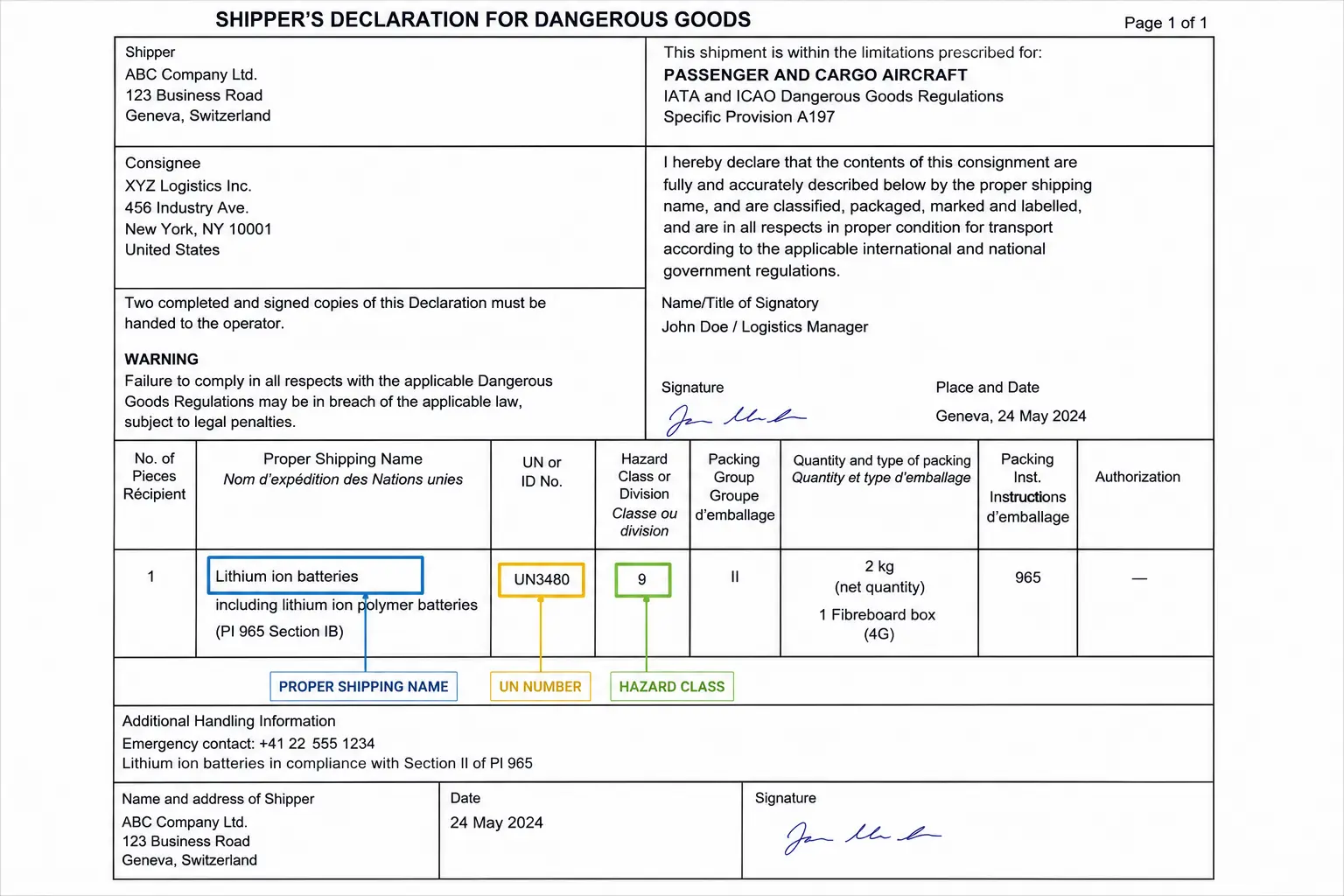
The Shipper's Declaration for Dangerous Goods is a document used to communicate detailed information regarding a Dangerous Goods shipment.
The document may contain:
- UN Number
- Proper Shipping Name
- Hazard Class
- Quantity
- Packing Information
The Shipper's Declaration helps ensure that relevant transport information accompanies the shipment.
⚠ Awareness only — this course does not provide qualification to complete or sign this document.
Visual Example
Air Waybill Awareness
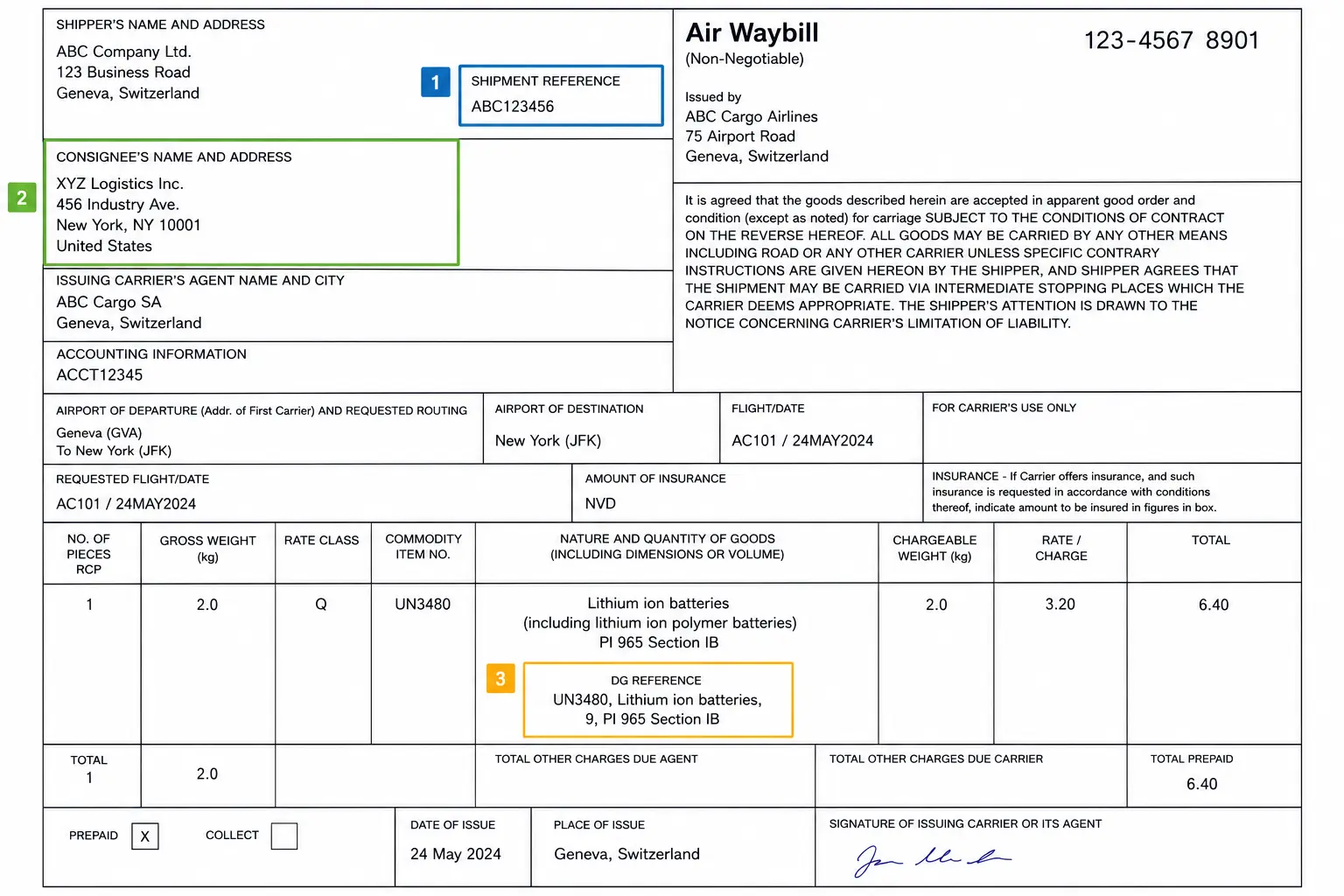
An Air Waybill (AWB) is a transport document commonly used for air cargo shipments.
It may contain:
- shipper information
- consignee information
- package details
- transport references
The Air Waybill helps track and identify shipments during transport.
Some Dangerous Goods shipments may include references to applicable DG documentation.
Visual Example
NOTOC Awareness
NOTOC stands for:
Notification to Captain
This document is used to provide the flight crew with information regarding Dangerous Goods carried on board an aircraft.
A NOTOC may include:
- package location
- hazard class
- quantity
- emergency considerations
This information supports flight crew awareness and emergency preparedness.
⚠ Awareness only — operational NOTOC procedures are outside the scope of this course.
Visual Example
Awareness of Operator Procedures
Operators may establish specific procedures relating to Dangerous Goods transportation and documentation.
Personnel should always:
- follow company procedures,
- seek guidance when unsure,
- and refer to applicable operational documentation.
When dealing with potentially hazardous materials, company procedures should always take precedence.
There are no comments for now.
to be the first to leave a comment.